
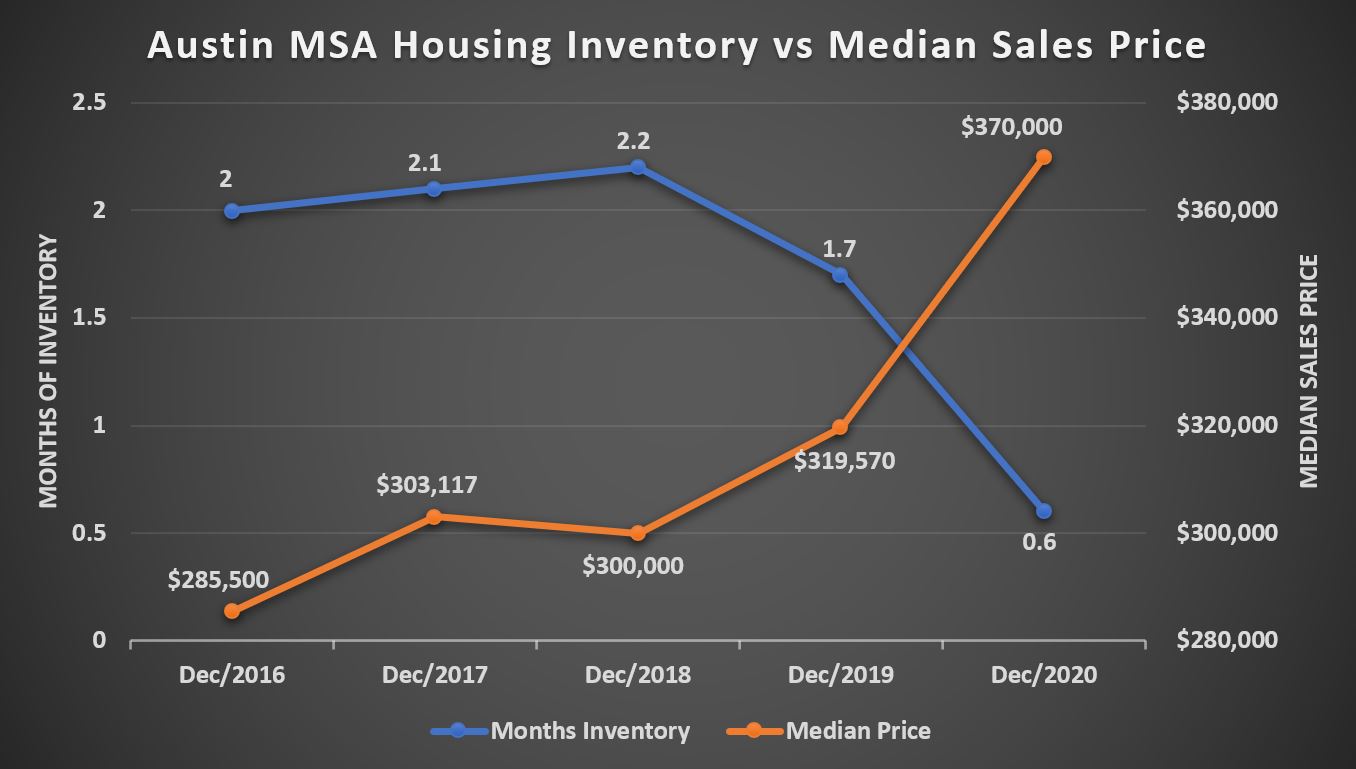
One housing chart sums up Austin’s hot seller’s market!

Austin has been one of the fastest growing cities in the US for decades. Because of its small size and abundant developable surrounding land, new home development has usually been able to keep up with buyer demand up until now!
How’d we get here?
According to 2019 statistics for US single family home building permits, Austin comes in #5. A tremendous number considering Austin is approx. the 30th largest metro area in the US.
2019 single family building permits top 5 US MSAs (Metropolitan Statistical Areas):
- Houston – 39,507
- Dallas/Ft Worth – 35,160
- Atlanta – 26,261
- Phoenix – 25,026
- Austin – 18,426
Central Austin has become very popular and real estate values have greatly appreciated not only there but in most of the city. Outside of Austin, there were always plenty of suburban neighborhoods where homes were still relatively affordable and where much of the new home building was taking place. Many of those new homes were starting in the $200’s. Because buyers had that option, nearby resale homes’ appreciation couldn’t rise any higher than new home builders were charging for similar homes.
2020 – The perfect storm
The market was already heating up before the Covid crisis even began. Mortgage rates were falling almost every week and hit all-time lows in 2020. As you can see on the previous chart, By December 2019, inventories were already dropping. Once Covid hit and housing became the centerpiece of the new work/school/gym/everything from home lifestyle, the market became even more heated. The final straw was the business announcements and ensuing media attention from companies like Tesla and Oracle coming to Austin.

2021 – What’s next
All this buying activity has led to a housing market like I’ve never seen in my 17 years of real estate. Already facing worker shortages, rising lumber prices and delays in getting necessary permits, many new home builders have sold most of what they have. With few new homes left to sell, the appreciation limit that competing new homes used to provide on nearby resale homes is no longer in place. Resale home prices are setting record highs each month.
Will house prices keep going up and eventually rival Silicon Valley’s? Absolutely not! Unique properties and areas of Austin will continue to become even more expensive (near downtown/lake/views) but moderately priced new homes in the suburbs will mitigate their effect on the metro area’s overall pricing (once the builders get caught up with the demand).
Austin more closely mirrors the Dallas and Houston markets than Silicon Valley. Silicon Valley is surrounded by undevelopable water and mountains with many cities in the area having tight zoning rules to keep denser development out. Dallas and Houston, despite both being larger and faster growing than Silicon Valley, still have affordable housing. The table below illustrates how limiting new housing in an area can dramatically affect housing prices.
TOTAL MSA housing permits including multifamily (2019) vs median single family house price (3rd quarter 2020, National Association of Realtors):
Total housing permits median house price
- Houston 63,672 $245,800
- Dallas/Ft Worth 62,955 $268,600
- Austin 32,037 $329,200
- San Fran/San Jose 20,111 $1,265,000 (San Jose MSA)
Builders are scrambling to get more product built but that could take some time. They can build out the lots they have and in some cases open new sections in existing communities but ultimately will need to develop entire new communities to deal with the demand. With financing, planning, permitting, utilities and roads, it could be at least a year before the market returns to a more normal balance. Until then I’m asking anyone who owns a home in the Austin area and has been thinking of selling to reach out to me and see if this ‘perfect storm’ might be a selling opportunity they don’t want to miss.
All statistics for this article unless otherwise noted were from the Texas A&M Real Estate Center.
